
 518-373-4111
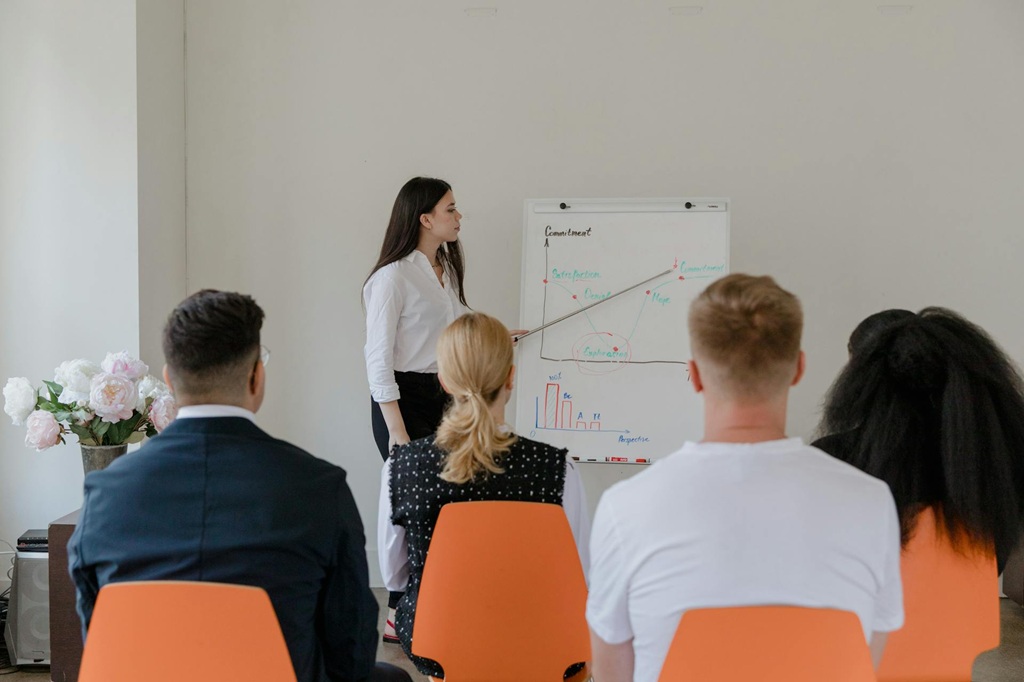
Workplace learning is entering a new era marked by slower hiring, shifting employee expectations, and rapid advances in artificial intelligence (AI). For employers, this creates a unique challenge: how to build a future‑ready workforce with the talent they already have while ensuring development approaches remain human-centered, flexible, and aligned with real career motivations.
Here are four learning and development (L&D) trends that are reshaping how employees learn, grow, and contribute in the workplace this year.
1. The Rise of Upskilling Amid Slowed Hiring
Skills will take center stage in 2026. With hiring pipelines tightening across many industries, organizations are increasingly relying on internal mobility to fill capability gaps. Employers are investing heavily in helping current employees transition into new roles, learn emerging competencies, and navigate shifting job expectations. As a result, upskilling is no longer optional. It’s becoming the primary means for workforce agility.
A recent America Employed survey revealed that more than one-third of companies (36%) report having open positions they cannot fill. The primary obstacle is not pay or benefits, but skills, as evidenced by the following:
- Half (50%) of employers say applicants lack relevant experience, up from last year.
- One-quarter (26%) of employers struggle to evaluate informal or self-taught skills.
In turn, as many employers can’t find the skills they need, they are now trying to build them internally. Companies are developing structured pathways that help employees gain the skills required for emerging roles, whether in digital operations, advanced analytics, customer experience, or AI‑supported workflows. Instead of traditional, lengthy retraining programs, learning is being delivered in targeted bursts that help employees move laterally, diagonally, or into expanded versions of their current roles.
This emphasis on developing from within not only reduces dependency on external recruiting but also increases engagement, retention, and the sense of career momentum employees want. Skills, not job titles, are becoming a mainstay of workforce planning. This focus on internal development strengthens organizational agility while helping employees pursue meaningful growth without leaving the company.
2. Reimagined Career Advancement With Conscious Unbossing
One of the most significant cultural shifts in 2026 is the move toward “conscious unbossing,” combined with a broader rethinking of what career advancement actually means. Employees are increasingly rejecting traditional step‑up promotions in favor of paths that offer balance, autonomy, and meaningful variety. At the same time, organizations are recognizing that old hierarchical models are too rigid for the pace of modern work. Conscious unbossing aligns perfectly with these evolving expectations: it replaces top‑down control with empowerment, partnership, and shared accountability.
Younger professionals, in particular, are rejecting traditional career paths, including middle management roles. Generation Z (Gen Z) respondents to a survey by global recruitment company Robert Walters shared that middle management roles “are too high stress with low reward.” Instead, Gen Z workers said they’d rather focus on meaningful work, be collaborative, and achieve work-life balance. In fact, over half (57%) of U.S. Gen Z workers aren’t interested in becoming middle managers. Instead, 60% opt for an “individual route to career progression over managing others.” Younger professionals aspire to be go-to experts without the emotional pressures and administrative work of middle management. They’d rather be recognized for their knowledge and contributions than for their hierarchical position.
In response to this growing trend, more managers are taking on a coaching role rather than acting as gatekeepers. They work side by side with employees to co-design growth paths, whether upward, lateral, or entirely custom. Advancement is becoming more fluid, grounded in skills, contributions, and personal goals rather than title changes. Even though younger workers may not want to climb the traditional career ladder, they still want to grow and lead.
By blending unbossed leadership with nontraditional career mobility, organizations create environments where employees feel both supported and free to grow in ways that match their strengths and preferences.
3. Modern Mentorship Opportunities
Mentorship is experiencing a resurgence in 2026 as organizations realize that some capabilities and soft skills, such as judgment, communication, collaboration, and adaptability, cannot be effectively taught through courses alone. As work becomes more complex and AI absorbs routine tasks, the need for human connection and perspective is actually increasing.
Modern mentorship programs are broader and more inclusive than those in the past. As such, employees could benefit from the following types of mentorship:
- Cross-functional mentoring is where employees are paired with mentors from different departments or functions within the organization. This approach expands networks and likely exposes individuals to new skills.
- Reverse mentoring allows younger employees to share their knowledge and experience with senior team members. This type of mentoring could help transfer digital skills, cultural awareness, and generational insights.
- Peer mentoring pairs colleagues at similar levels to support each other’s skill building, problem-solving, and confidence through shared experiences.
- Group mentoring is when one mentor works with several mentees at once. This style can help create shared learning communities and foster a sense of belonging.
Mentorship is becoming a strategic tool not only for development, but also for retention, engagement, and company culture. In a time when employees crave guidance but not necessarily hierarchical advancement, mentorship provides clarity, confidence, and connection.
4. The Necessity of AI Literacy
AI is now embedded in daily workflows across functions. As a result, AI literacy has become a foundational skill in the workplace, much like digital literacy was just a decade ago. Rather than training only specialists, more organizations are equipping every employee to:
- Understand how AI systems support their work
- Use AI tools responsibly and effectively
- Recognize when human judgment is required
- Interpret AI-generated insights
AI literacy is not about coding or building models; it’s about becoming a confident, capable collaborator with AI. Employees who understand the possibilities and limitations of AI can work more efficiently, make better decisions, and adapt more quickly as tools evolve.
For organizations, embedding AI literacy across roles is essential to unlocking the full value of technological investments and ensuring employees feel empowered—not threatened—by automation. Consider these ways employers are increasing AI literacy among employees:
Help employees understand how AI tools work and how to use them responsibly
Provide foundational training that demystifies how AI tools function, including their capabilities, limitations, and appropriate use cases. Demonstrate practical ways AI can streamline tasks, support decision-making, and free up time for more strategic work.
Encourage experimentation with AI tools
Give teams low-stakes opportunities to try tools like generative AI, chatbots, or data visualization platforms. Provide “sandbox” environments or lab-style sessions to explore functionality and creative use cases.
Create peer learning communities
Form internal AI learning groups, host lunch-and-learns, or offer “tech buddy” programs that pair digitally fluent employees with those who want to improve their skills.
Partner with external platforms or providers
A growing number of cost-effective online resources cover topics ranging from AI fundamentals to advanced machine learning.
The organizations that thrive in this next wave of innovation will empower their teams to grow with the change rather than fear it.
Summary
The L&D trends shaping 2026 reflect a workplace that is simultaneously constrained and full of possibility. Organizations leaning into these trends may be on their way to building more resilient, more adaptable, and more deeply engaged teams who are prepared for the challenges of 2026 and beyond.
© 2026 Zywave, Inc. All rights reserved.
More Accessible Learning and Development for Your Employees
Employees seek more value from their employers, with learning opportunities at the top of their lists. Make learning accessible to everyone at your organization with isolved, GTM’s HCM platform. The Learn & Grow module, an end-to-end learning management system (LMS), provides continuous career growth and feedback. Improve employee retention and set your company apart by offering personal and professional learning opportunities, configurable career growth paths, and feedback on training progress. Request a free quote to learn more.