
 518-373-4111
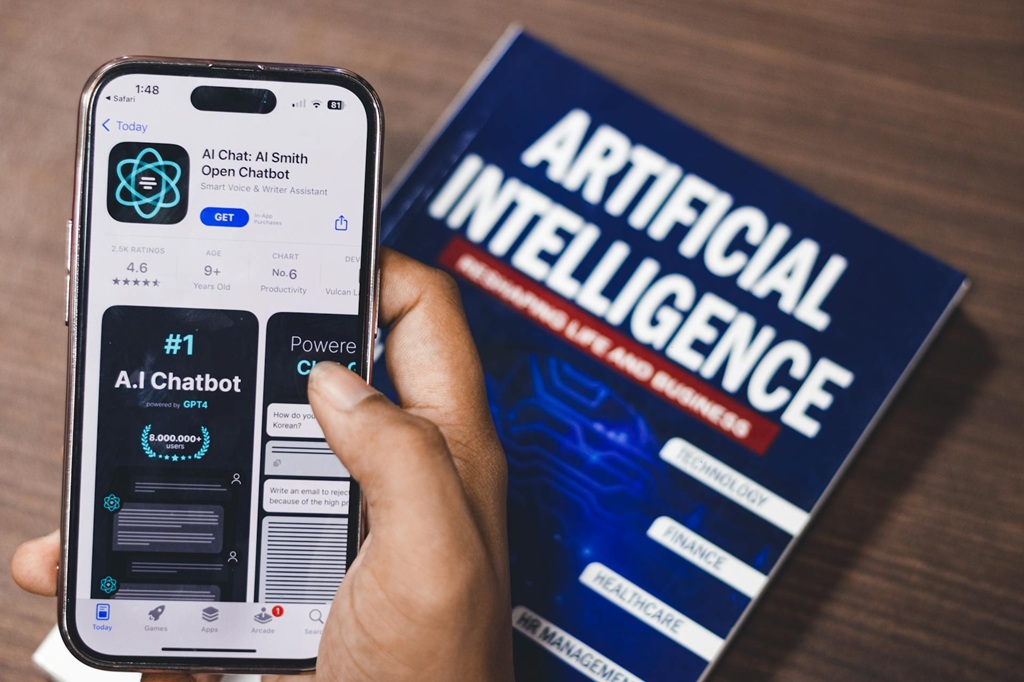
Employers of all sizes and across industries are increasingly realizing operational benefits, including improved productivity, greater accuracy, and smoother workflows, when employees are effectively trained to use artificial intelligence (AI) tools. Yet, organizations often face a common barrier: getting employees to buy into adopting and utilizing these tools. Without genuine employee buy-in, investments in AI can under-deliver or even create unintended friction.
Here are the common challenges to employee buy-in, along with actionable tips for HR leaders and managers aiming to drive successful AI adoption.
Common AI Challenges and Obstacles
While the promise of AI is clear, gaining employee acceptance isn’t always easy. Workers bring a mix of excitement, skepticism, and uncertainty to new technologies, and those perceptions can shape the success or failure of any rollout. The following are some of the most common hurdles organizations face when introducing AI in the workplace:
Fear of job displacement
Many employees instinctively worry that AI will replace them rather than empower them. According to a survey from IAPP of 1,600 generative AI users, a significant share of the workforce expressed concerns about diminished value or creative input when AI is introduced. Only 6% of workers say workplace AI use will lead to more job opportunities for them in the long run. About a third (32%) say it will lead to fewer opportunities for them, and 31% say it will not make much difference. Innovation in AI could displace 6% to 7% of the U.S. workforce if it is widely adopted.
Lack of training or clarity
Access to AI tools alone doesn’t ensure adoption. A recent Gallup study found that employees who strongly agreed that their manager supported AI use were nearly 9 times more likely to say AI helps them do their best work. Significant barriers include unclear use cases (16%), concerns about legal/privacy risks (15%), and insufficient training or knowledge (11%). When employees don’t understand how AI fits into their day-to-day tasks, they’re apt to ignore it or use it reluctantly.
Employees don’t always see how AI benefits them
Many employees view AI as a tool that primarily benefits the organization by boosting productivity, cutting costs, and streamlining workflows, and that may potentially eliminate jobs without any personal advantages. Buy-in is limited without a visible link to how AI can make their own work easier, safer, or more meaningful, or aid in career advancement.
More work rather than less
Another concern for employees is whether AI will increase their workload, require more oversight, or demand new skills. AI integration initiatives that focus only on productivity can trigger skepticism and resistance. If employees believe adopting AI means extra tasks, monitoring, or steep learning curves without visible benefits, buy-in may lag.
Misalignment of leadership and workforce perceptions
Surveys find a disconnection between executive enthusiasm for AI and the realities of frontline employees. For example, only 45% of employees in one study believed AI adoption over the past year was going well, compared with 75% of C-suite respondents. When leadership rolls out AI without involving employees in the process, the risk of a superficial “tool push” rather than a meaningful transformation arises.
Tips for Getting Employee Buy-In
Overcoming resistance takes more than simply introducing new tools; it requires communication, training, and trust. Organizations that take a thoughtful approach can turn initial hesitation into genuine enthusiasm. The following strategies can help leaders build confidence and long-term adoption across their teams:
1. Train employees effectively
Training goes beyond introducing software. It involves helping employees understand how AI can support their job, link to career growth, and reduce mundane work. As experts in workplace transformation note, investing in AI education reassures employees that they play a vital role in an AI-driven workplace. Practical training should include hands-on practice, job-relevant examples, and ongoing support rather than a one-time orientation.
2. Help them realize the benefits
Employees are more likely to adopt AI when they see a clear advantage, such as time saved, fewer errors, or new opportunities. For example, highlighting how AI reduced the time needed to complete a tedious or repetitive task can make its value tangible. Engaged employees contribute better data, strengthen use cases, and drive continuous improvement when they understand AI’s impact. Leaders should showcase early wins and share real stories of how AI has enabled people to work smarter and focus on more meaningful tasks.
3. Enable choice
Compelling adoption by mandate often backfires. Employees know that while AI can create efficiencies, not every application is a good use case. An alternate approach is to pilot a few use cases, let employees experiment, then expand. By enabling voluntary adoption pathways and championing user-led initiatives, organizations can build momentum organically.
4. Address fears transparently
Employee reluctance often stems from unresolved fears: “Will my job be replaced?” “Will my work now be judged by an algorithm?” “Does this tool bring extra risk?” Organizations should address these directly and honestly. When leaders acknowledge uncertainty and explain human-in-the-loop safeguards, they build trust and reduce resistance.
5. Allow for feedback and continuous improvement
Involve employees early. Let them shape how AI gets deployed, which workflows it supports, and how training will work. Create mechanisms for user feedback, iterate on the tool/process, and recognize contributions. When employees feel ownership rather than being passive recipients, adoption rises.
6. Link AI use to career development and meaningful work
Rather than simply saying “use this tool to be more efficient,” frame AI as enabling employees to focus on more meaningful, higher-value work. Many employees are ready for AI, and they want to gain new skills for it. Focus on how to position AI use as part of employees’ professional growth: new responsibilities, creative problem-solving, and broader impact.
7. Ensure leadership alignment and manager support
Successful adoption depends heavily on frontline managers. Leaders should demonstrate their own AI use, highlight successful cases, and communicate purpose, not just mandate policy. When employees believe leadership is committed, they are far more likely to engage.
Takeaway
The current and potential use cases of AI in the workplace are substantial, including elevated productivity, more accurate decision-making, and the ability to automate tedious tasks or, in some cases, entire roles. But technology alone isn’t sufficient. For organizations to benefit, employees must embrace the tools and processes. That means acknowledging their fears, equipping them with training, and showing them how it can benefit their career. With thoughtful execution, employee buy-in becomes a catalyst—not a barrier—to unlocking AI’s full value.
The application of AI will look different for every employer; what enhances efficiency in one organization may improve decision-making or employee engagement in another. The key is helping your workforce see AI as a partner, not a replacement.
© 2025 Zywave, Inc. All rights reserved.
When AI Isn’t Enough, GTM Can Help
While AI is a powerful tool for improving efficiency, it’s not a complete solution, especially for complex tasks such as payroll compliance, HR strategy, and handling sensitive employee issues. This is where outsourcing can make a big difference. Partnering with GTM for payroll and HR services ensures your business stays compliant with ever-changing regulations, handles employee matters professionally, and has access to expert guidance that AI alone can’t provide. By combining the power of automation with the expertise of experienced human support, your business can operate smarter, faster, and with greater confidence.
Fill out the brief form below to learn more.